AI Can Learn the Law. Can It Learn the Judge?
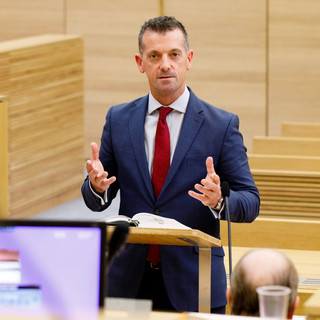
"Who's my judge?"

There is a lot of talk at the moment about AI replacing lawyers.
Some people might think that that’s a positive.
A huge positive in fact.
Some of it, I think, is justified.
AI can already read legislation, analyse judgments and find legal arguments at extraordinary speed. Give it another few years and its knowledge of the law will be better than that of most individual lawyers.
In fact its probably at that point already.
But here’s a question: AI can learn the law. But can it learn the judge?
Because they're two very different things.
The law isn't the whole case
People who don't spend much time in court understandably tend to think about law as a set of rules.
You're over the drink-driving limit.
You're guilty.
You're under the limit.
You're not.
But that's not how criminal cases work.
A breath, blood or urine reading is evidence.
That’s all.
Just one piece of evidence among many other pieces of evidence.
All of those pieces correctly joined together by the State may end in a conviction.
May.
But if there’s a break, a gap, a ‘void’ in the evidence, it may not.
Even though someone may be scientifically over the limit.
If procedural or legal safeguards are missing the case may fail.
Between the two lies an entire legal process.
Was the stop lawful?
Was the arrest lawful?
Were the statutory and procedural steps followed?
Is the evidence admissible?
What happened at the roadside?
What happened in the Garda station?
What does the Garda say happened?
What do you say happened?
They’re not always the same you know.
And, ultimately, who does the judge believe?
Or to put it more fairly: Has the State proven its case?
Or is there something ‘missing’?
Do I as a judge have a doubt?
That last question is important.
Because judges aren't computers.
The same law. Different judges.
I've spent the best part of three decades around Irish courts, first as a Garda and later as a solicitor.
One thing becomes very obvious when you've spent that long in court.
Judges are different. All of them.
They have the same legislation in front of them.
They are bound by the same decisions of the superior courts.
But they are still individual human beings required to make individual decisions.
And within the boundaries imposed by law, judges can have considerable discretion.
This is huge. The High Court and Supreme Court have given lower court judges a lot of scope to arrive at decisions.
That means that different judges may see the same evidence differently.
More on that later.
Judges assess witnesses.
They make findings of fact.
They decide what evidence they accept and what they don’t.
They decide what weight they attach to particular evidence.
One judge might regard a particular discrepancy in a Garda's evidence as extremely significant.
Another might regard exactly the same discrepancy as relatively unimportant.
One judge may immediately see the significance of a particular legal argument.
Another may require considerable persuasion.
That's not a criticism of judges.
It's an unavoidable consequence of asking human beings to make decisions.
They tend to end up being, well, human.
That annoys a lot of people in the same way sports pundits scream about referees and perceived ‘inconsistency’.
They think that referees should all come to the same conclusion about every infringement they see on the field of play.
Are these people listening to themselves?
You want every referee to be the same, to apply the law the same every time?
Fine.
Until that law is applied against you, and then you’ll do what every person prosecuted for an offence does: try to argue ‘context’.
What do I mean?
"I was kicked out of my house by my abusive husband and I decided to sleep in the car. Then he rang the Gardai on me and they arrested me for being drunk in charge".
That happened to a client of mine.
Or what about this: "my boyfriend beat me up in a hotel room and I ran to my car hysterically upset. I jumped into the car out of fear and drove a few yards and was arrested".
That too happened to a client of mine.
If judges applied the law strictly and consistently they would have disqualified those clients of mine.
But they didn’t, because they heard the context.
That’s the system you now want to change?
Wouldn’t you like the judge to understand what had happened to you before you broke the law?
You can forget about that with AI judges.
Everything you had ever thought was true about fairness and justice would be dismissed overnight.
These robotic judges would apply the law rigidly and if that caused a life-changing disaster to you, so what?
These judges simply would not care.
They could not as they are not human and lack feelings like empathy.
And before you say it, please don’t waste my time on the: “well, I wouldn’t ever drink and drive or take drugs, so I have no sympathy for them” argument.
So you don’t drink and drive (well done, neither do I) and never take drugs (me neither).
But let me ask you something: what about your son or daughter?
Would they be as wise and sensible as you?
What about your good friend who’s confided in you that they’re stuck in a loveless marriage and ‘occasionally’ drink a little more than they should just to numb the misery?
If they found themselves in trouble with the law tomorrow, you’d demand the book be thrown at them, right?
After all, no excuse and all that.
You need to be consistent in your beliefs, yes?
Or is it one law for you, your family and friends and another for everyone else?
That either makes you a hypocrite, or maybe you haven’t examined this issue well enough to form a rounded opinion?
I’d like to think it’s the latter.
Richard Posner asked the same basic question
I've recently been reading Richard Posner's How Judges Think.
Posner was himself a judge and one of America's best-known legal thinkers.
The central question behind the book is fascinating.
What actually happens when a judge makes a decision?
Because the traditional view of judging is quite simple.
Find the facts.
Find the law.
Apply one to the other.
Decision.
Except human decision-making isn't quite that neat and tidy.
There is rarely just black and white in court.
A lot of grey if I’m honest.
Try seeing daylight through grey cloud.
Research into judicial decision-making has repeatedly raised a much more interesting possibility.
The law matters enormously.
But so does the person applying it.
And lawyers who spend their lives in court already know this.

The first question I want answered
When I arrive at a courthouse, one of the first things I want to know is:
Who's sitting? Who’s our judge?
Clients rarely think to ask this question.
And I don’t blame them. Nothing they’ve ever seen in movies or tv has focused on this.
They don’t think it matters much.
But it is incredibly important.
They want to talk about the evidence you’ve discussed with them.
Or the Garda's statement.
Or something they've discovered online.
And by online here I’m talking about Claude or ChatGPT.
All perfectly reasonable.
But I want to know who will actually decide the case.
Because that affects how I think about everything else.
Not because you have some special relationship with a judge.
You don't.
And certainly not because the law somehow changes depending upon who's sitting.
It doesn't.
But advocacy isn't simply about having a good argument.
It's about communicating that argument to the particular human being who has to decide whether they accept it.
Those are very different things.
Now try asking Claude or ChatGPT what arguments work with a specific judge, what doesn’t and how much weight they’re likely to give to prosecution or defence issues.
Now try applying these questions to every judge in the country.
There’s only about 120 district and circuit court judges.
Knowing your judge
There is a phrase lawyers sometimes use:
Know your judge.
I don't mean knowing them personally.
I mean understanding how they approach cases.
After appearing before a judge repeatedly, you begin to notice things.
What sort of evidence concerns them?
Do they want lengthy legal submissions or the shortest possible route to the issue?
Do they ask lots of questions?
If they know the law well, they’re unlikely to sit through lengthy oral submissions.
After all they already know this stuff, so why listen to it again?
So they’ll try to engage in case-management, to ‘slice down’ the issues, so the case lasts an hour (or less) rather than an entire day.
After all, they want to clear their lists, not add to them.
Or maybe they don’t understand the law in this area well, and maybe welcome lengthy submission’s to help them form a view?
Maybe they’ll have plenty of questions and will assign a number of hours to the issues?
Or maybe they’re the kind of judge who’s heard the evidence from both sides, doesn’t know what decision to come to and asks the lawyers on both sides to prepare written submissions?
They will then adjourn the case for 4-6 weeks for this to be done so that they can read the material and form a decision?
There are different types of judges with different patterns of behaviour, and these patterns change depending on the case in front of them.
There are other types of judges.
What sort of inconsistencies in evidence do they consider important?
Are they pro-State or pro-Defence?
In my experience when a judge is on one side or the other, they are almost always on the side of the State.
Quite a lot of them across the country are.
That is their default setting.
And when you are in front of one who isn’t, your heart leaps because you always have a chance.
Knowing one from the other can be the difference between success and defeat.
Experience teaches you that.
Do they want the relevant judgment opened and brought through carefully, or do they already know precisely where you're going?
And perhaps most importantly:
Is the argument working?
You can sometimes see that in real time.
The questions change.
The judge focuses on something you said or comes back to something you said a few minutes earlier.
Maybe that argument is ‘touching’.
Something that appeared unimportant twenty minutes earlier suddenly becomes central to the case.
That's when advocacy becomes something very different from legal research.
So knowing the law is obviously important but knowing your judge and being able to “think on your feet” immediately is just as important.
As a lawyer you have your flow. You know your arguments because you’ve prepared for them.
But you also have to put yourself in the mind of the judge.
Think of your case from the judge’s point of view.
If you were them, what would you say?
Now you understand.
Sometimes the best advocacy is shutting up
This sounds almost ridiculous, but it's something experience teaches you.
A witness gives you exactly the answer you wanted.
Stop.
Or to put it more bluntly: shut up.
Don't ask the next question simply because it's written in your notes.
That next question might give the witness an opportunity to repair the damage.
The same principle applies when addressing a judge.
Sometimes you've made the point.
The judge understands it.
Stop there. Otherwise you risk annoying them or insulting their intelligence.
As one judge quietly explained (off the bench) “when you finish your submission don’t ever say, ‘Now, to recap.’”
“Because’, he said, ‘it implies I wasn’t listening the first time.”
Point taken, I thought.
Know when to shut up.
Keep talking and you risk talking yourself out of the position you've just achieved.
AI can probably tell you the ten questions you might ask.
Experience tells you not to ask question number ten.
That's a very different form of knowledge.
It also tells you when to be quiet.

I've seen how much the judge can matter
One case particularly brought this home to me.
In Galway District Court a few years ago, I defended a woman charged with drink driving in very unusual circumstances.
Both Counsel (Colm Hennessy BL) and I argued the defences of duress and necessity.
The judge accepted the defence.
The prosecution was dismissed.
It was the first recorded successful use of those defences in an Irish drink-driving prosecution.
But I've often thought about something else concerning that case.
The judge sitting in Galway that day was a visiting judge.
Would every District Court judge in Ireland necessarily have reached precisely the same conclusion on the same evidence?
I don't know.
Nobody can know.
But I knew one thing, and we all acknowledged it afterwards.
Had the regular judge been sitting in court that day, the outcome would have been so different.
I knew that with 100% metaphysical certitude.
And that's exactly the point.
The law didn't change.
The evidence didn't change.
But judges are given the responsibility of assessing that evidence and applying the law to it.
There is human judgment involved.
That’s why they’re called judges. Their job is to judge. This comes with mistakes but it also comes -on occasion- with prejudices.
Because you’re dealing with humans.
And we humans are imperfect.
That’s what makes us human.
Now imagine AI representing the client
This is where the future gets interesting.
Imagine someone is prosecuted for drink driving in 2030.
They decide they don't need a solicitor.
Instead, they spend a week with an extraordinarily powerful AI system.
They upload their disclosure.
The AI reads every Garda statement.
It reads the legislation.
It reads every relevant High Court, Court of Appeal and Supreme Court decision.
It identifies three potential legal arguments.
Maybe they're excellent arguments.
The person walks into court armed with more legal research than would have been possible for an individual solicitor to conduct twenty years ago.
Then the hearing starts.
The Garda gives an unexpected answer.
What now?
The judge interrupts and asks a question.
What now?
How do you respond to this completely unexpected development?
And you have to respond now, right away.
You will not be allowed to check your phone.
The judge appears completely uninterested in argument number one but suddenly asks three questions about something the AI considered relatively insignificant.
What now?
A prosecution witness has just given an answer which might decide the case.
Do you ask another question?
Do you challenge the answer?
If you do, what do you say?
What can you say? After all you don’t even know the rules of evidence so you don’t know if you’re even allowed to ask that question.
Do you sit down?
The judge asks:
"Mr Horan, where exactly are you going with this? What case law are you relying on? You’ve established an error in the evidence. That’s accepted, but where’s the prejudice to your client? Where’s the hardship or detriment?"
You have perhaps ten seconds to answer.
Perhaps.
That's practising law.
And then the judge brings the hammer down.
AI knows what has happened. Advocacy is about what is happening.
I think that's the distinction.
AI is extraordinarily good at information.
And it will get much better.
It can study thousands of previous cases.
It can identify patterns.
It might eventually know every judgment a particular judge has delivered.
But a courtroom is happening now.
How do you react to that?
Or what about this scenario:
A judge asks an unexpected question.
A witness says something in the witness box completely unexpected or that you hadn’t prepared for.
You now have to react immediately or risk losing the case.
And that’s the nature of court.
Things happen in real time that you hadn’t expected or prepared for and now you have to react on the spot.
And you’re doing all this in a packed courtroom.
That’s pressure.
How do you react to pressure like that?
Likely you haven’t thought about that.
How could you?
And no, you will not be allowed to answer by talking to Claude or ChatGPT.
The judge is addressing you, not your AI friend, and they want an answer right now.
In court seconds count.
The atmosphere in the case starts to shift.
You notice the judge wince, a flicker of disapproval on their face.
The argument you thought was your strongest point isn't working.
Another point might though.
What do you do?
Years spent in court develop something that's difficult to describe.
Pattern recognition, perhaps.
Experienced lawyers call it a “sense”.
The author Malcolm Gladwell calls it ‘thin slicing’, that part of your brain that allows you to make judgments on people or things just by looking at them, and not understanding why you feel that way.
You might call it a hunch or a ‘gut feeling’.
Its powerful and it usually has a big bearing on what you’ll do.
In court you develop a feel for when to push.
When to change direction.
When to stop.
When to challenge.
When to sit down.
And when to shut up.
Maybe AI will eventually learn that too
I wouldn't rule it out.
Twenty years ago, much of what AI can do today would have sounded ridiculous.
So I'm reluctant to say there is anything AI will never be able to do.
But there is an interesting obstacle.
To replace courtroom advocacy, AI doesn't merely have to understand law.
It has to understand human beings.
Not human beings generally.
This witness.
This prosecutor.
This judge.
This morning.
In this courtroom.
During this particular case.
That's a considerably harder problem.

The judge is the wildcard
People sometimes ask me how two apparently similar cases can produce completely different outcomes.
There can be dozens of reasons.
The evidence wasn't actually identical.
The legal issues were different.
Different witnesses gave evidence.
Different arguments were made.
But sometimes there is another variable people overlook.
Different judge.
That's uncomfortable for people because we'd prefer law to operate almost mathematically.
Input the facts.
Apply the law.
Receive the answer.
But that's not how human decision-making works.
And for the foreseeable future, human beings will continue deciding criminal cases.
That's why I think AI will transform legal practice.
It may replace huge amounts of what lawyers currently do.
It will research.
Draft.
Analyse.
Compare.
Find arguments.
And lawyers who refuse to use it may eventually find themselves at a considerable disadvantage.
But there's a difference between knowing the answer to a legal question and standing in a courtroom persuading another human being to accept it.
AI can learn the law.
It already has.
The much more interesting question is whether it can ever learn the judge.
And not just one judge, all of them.


Comments